


Papillomas arise as a result of infection of the human body by a virus.There are a large number of pathogen species, 32 of which are pathogens.
A photo with a description will help establish the classification of papillomas, the degree and stage of development of the virus.Diagnosis and treatment are carried out by a dermatologist or immunologist.It is necessary to monitor the condition of the neoplasm, since there is always a risk of tissue degeneration.
Causes of papillomas, general symptoms
Papilloma is a papillary growth that appears on the surface of the skin or mucous membranes.In most cases, the neoplasms are benign.Malignant papillomas are rare.
The virus is present in the body of every person; the appearance of warts occurs under the influence of negative factors, against the background of which immunity decreases.
The causes of infection in the body are as follows:
- promiscuous sex life without the use of special protective equipment;
- metabolic disorder;
- decrease in the body's defenses;
- bad habits (abuse of alcohol, cigarettes and drugs);
- diseases of the digestive system;
- failure to comply with simple rules of personal hygiene.
During childbirth, the likelihood of infection of the baby increases if the virus is in the mother’s body.The risk of infection appears when a person is in public places.The causative agents of viral infections also settle on surrounding things, objects that, after contact, enter directly into the body.
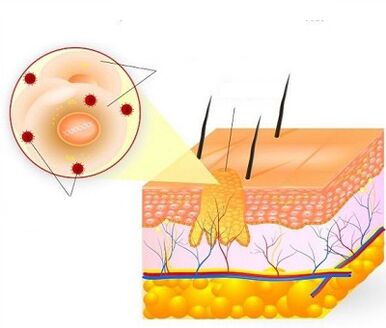
The development of the disease is accompanied by pronounced symptoms, the main of which is the appearance of a neoplasm on the body (condyloma, warty papilloma).
In some situations, a person also experiences the following symptoms:
- the skin at the site of the wart turns red;
- itching appears;
- the skin dries and peels;
- tingling appears.
If the localization area is the genitals, the person is also worried about discomfort during movement.In addition, the clinical picture of the pathological condition depends on the type of papilloma and accompanying disorders in the body.In any situation, you need to contact a dermatologist and start treatment.
Types of papillomas with descriptions
Types of papillomas (a photo with a description will help identify the tumor) in humans:
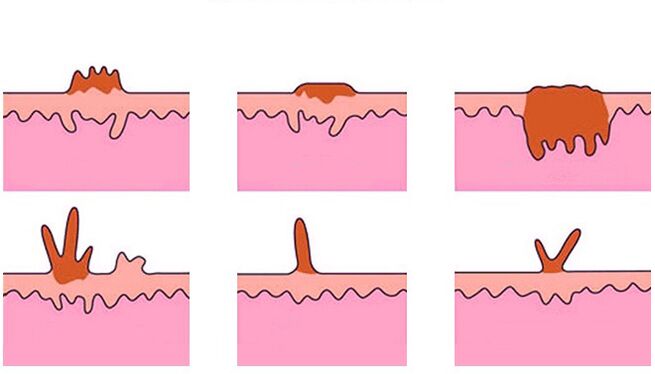
| Name | Description | |
| Ordinary | Warts vulgaris are more common in young people.The affected area in most cases is the fingers.The cause is damage to the skin, fungal diseases or the negative effects of chemicals.Small papillomas rise above the skin and are flesh-colored.They do not pose a threat to human life if they are not damaged during hygiene procedures. | |
| Filiform | Papillomas that form on a thin stalk in the armpits, mammary glands, neck or face.The color of the neoplasm is flesh-colored.As a result of damage to the filiform wart, slight bleeding occurs, which quickly disappears.Laser or cryodestruction is used for treatment. | |
| Flat | The classic type of wart, which is characterized by a slight yellow tint.Appears on the face, feet and body.As a result of the negative impact on them, the growths become inflamed and cause itching.Flat papillomas are usually removed through surgery, especially if they are often damaged and cause discomfort. | |
| Pointed | Warts that appear in the groin and genital area after unprotected sexual intercourse.Pointed papillomas are characterized by rapid growth, fusion and a bumpy surface.If such a tumor is damaged, the risk of secondary infection increases.A dangerous type of wart that must be treated under medical supervision. | 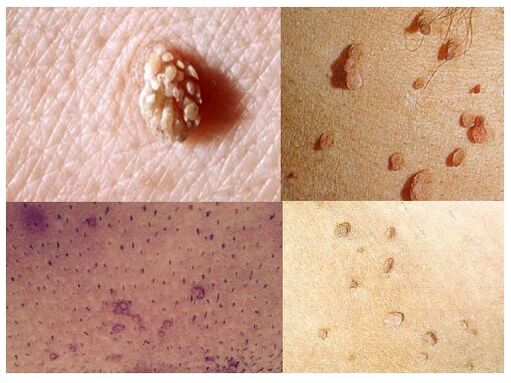 |
| Lewandowski-Lutz | Neoplasms of a rare form, found mainly in children.Localization area: hands, feet.Papillomas are dark in color.Surgical treatment is necessary, since such growths can degenerate into malignant tumors. | |
| Plantar | Warts form on the feet.During movement they provoke discomfort, sometimes painful sensations.In most cases, such warts appear in children and disappear on their own. | |
| Juvenile | A rare type of papillomas that is diagnosed in young children.Infection of a small organism occurs more often during labor if the mother has warts in the genital area.Juvenile papillomas appear on the surface of the oral mucosa.They also affect the vocal cords and interfere with the functioning of the respiratory system. | |
| Papillomatosis | A pathological condition in which there is a sharp increase and spread of warts throughout the human body.This is a generalized form of the disease, which is most often found on the face, hands or genital area.Damage to the mucous membrane or internal organs is dangerous to human life. |
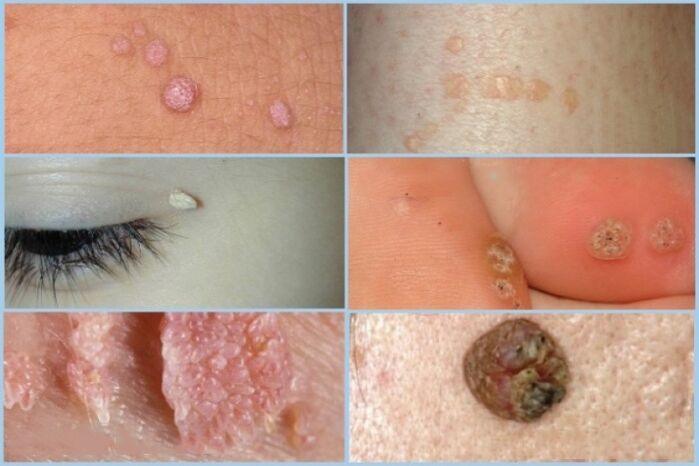
A dermatologist will help you establish an accurate diagnosis; a specialist will select the most effective treatment to prevent possible complications.It is important to differentiate a wart, since many skin diseases are confused with them (callus).
What do localization sites say?
Types of papillomas (a photo with a description will allow you to establish a preliminary diagnosis) are classified according to location.
A dermatologist can presumably determine the cause of a viral infection:
| Name | Description |
| Head | The main reason lies in a viral or bacterial infection of the body when a dormant pathogen is activated. |
| Face | |
| Eyelids | |
| Throat | Warts in the larynx more often appear in people who periodically strain their vocal cords (teacher, actor, announcer). |
| Language | The first to suffer from the action of papillomavirus is the tongue, on which small bumps with white grain appear. |
| Neck | The provoking factor is stress, overwork, colds, and taking antibiotics. |
| Mammary glands | The cause of papilloma is wearing underwear and frequent sweating. |
| Genital organs (external and internal) | The appearance of warts in intimate places indicates infection of the body with sexually transmitted diseases, as a result of which immunity has decreased. |
| Body | Warts are formed as a result of frequent damage to the skin or contact with various irritants. |
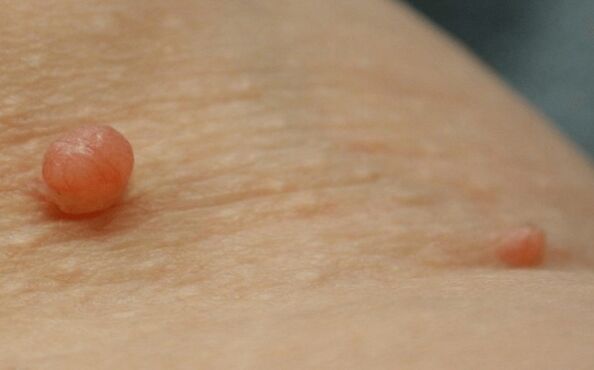
In any situation, it is necessary to establish the exact cause of papilloma formation.Only after diagnosis does the doctor prescribe treatment.
Non-dangerous and dangerous types of HPV
Most warts are harmless to humans and can be easily removed.But there are neoplasms of high oncogenicity that provoke malignant processes.
There is the following classification of such papillomas:
| Name | Description |
| Low gene group | Strains 1-5, 7, 10, 12, 14-15, 17, 19, 20-24, 26-29, 57. Characterized by the formation of uneven gray warts. |
| Group with low oncogenic risk | Strains 6, 11, 42-44, 53-55.The growths are most often associated with cervical condylomas. |
| Group with average oncogenic risk | Strains 31, 33, 35, 52 and 58. Warts most often appear on the surface of the mucous membrane of the genital organs.There is a risk of transformation of the affected tissues.At an early stage of the disease, symptoms can be eliminated with the help of immunostimulating drugs. |
| Group with high oncogenic risk | Strains 16, 18, 36, 39, 45, 51, 56, 59 and 68. Particularly dangerous warts that indicate a precancerous condition and require immediate treatment. |
A dermatologist and comprehensive diagnostics will help you establish an accurate diagnosis.You should not self-medicate, it can be dangerous to your health.
What is the risk for women and men?
In most cases, papillomas are not life-threatening.
But under the influence of numerous negative factors, the risk of serious complications increases:
| Name | Description | |
| Cervical dysplasia | A precancerous condition in which a change in the structure of the mucous membrane of the cervix occurs.The epithelium thickens, grows, and the maturation of the cell layer deteriorates and is rejected. | 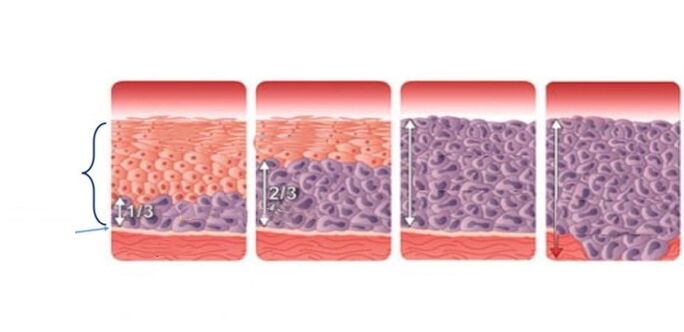 |
| Carcinoma | A malignant disease that affects various internal organs.The tumor divides chaotically and quickly grows into neighboring tissues. | |
| Impotence | A disease in which erection is impaired and sexual impotence occurs. |
Many warts that appear on open areas of the body cause severe emotional discomfort and a person’s self-esteem decreases.But the main danger lies in the risk of tissue degeneration into a malignant tumor.
What does the color of papilloma indicate?
Papilloma is the result of the development of a viral infection (HPV).New growths come in different types and colors, confirmed by a photo with a description.If there is no discomfort or obvious disturbances, there is no need to worry.It is necessary to go to the hospital if there are visual changes, especially if they affect color.
| Name | Description |
| Red wart | Initially, papilloma may be this color.But in some situations, it changes its flesh color to a red tint as a result of damage, after stress, or during treatment with hormonal drugs. |
| Black papilloma | The cause of darkening of the growth may be a bacterial infection of the human body, a pathological influence, or taking certain medications.The same applies to damage to the surface of the papilloma. |
| Brown wart | A change in the color of the wart occurs after treatment with agents that are intended to remove papilloma.The growth also becomes brown as a result of its systematic damage. |
| White papilloma | Light color indicates deterioration of growth nutrition.This happens when the body independently fights the virus and defeats it.In this situation, the wart dies off on its own. |
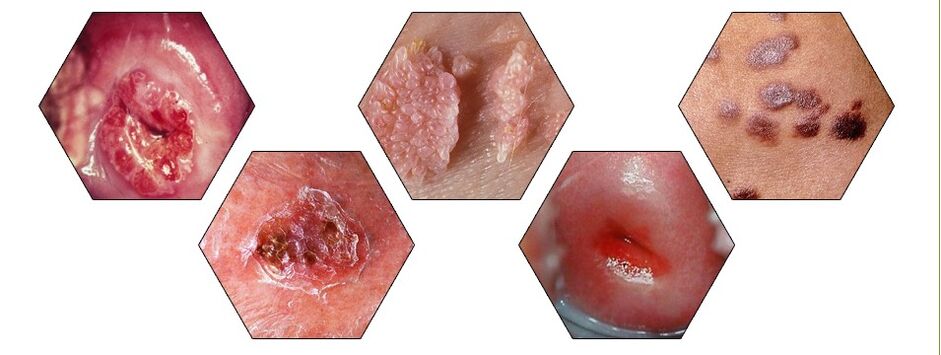
The color change of papilloma occurs during the strengthening of the immune system.In any situation, it is necessary to visit a dermatologist to make sure there are no complications.
How to determine the type of growth?
Types of papillomas (a photo with a description will show what a growth may look like) will help determine a comprehensive examination.The doctor prescribes instrumental and laboratory tests to the patient, taking into account his condition and complaints.
| Name | Description |
| Colcoscopy | A diagnostic method that involves the use of acetic acid. |
| Polymerase chain reaction (PCR) | The examination helps determine not only the papilloma virus, but also other diseases. |
| Biopsy | The specialist takes a small piece of the wart to determine the nature of the growth in the laboratory. |
Ultrasound examination (ultrasound) helps confirm or refute the development of papilloma inside the human body.
Antiviral therapy
Complex therapy involves the use of special drugs orally.Removing papilloma is not enough; it is necessary to fight the virus that caused its appearance.
If the oral cavity is affected, it is recommended to rinse with antiseptic agents.
Boosting immunity
The types of papillomas (a photo with a description will help to accurately determine the type of growth) are different, but they all indicate that a person has weak immunity.Therefore, it is necessary to increase the body's defenses.
Many immunostimulating agents also have antiviral and anti-inflammatory effects.In the initial stages of the disease, you can additionally use external medications (gels, ointments).
Hardware removal of formations
Hardware removal of warts is prescribed to patients in the following situations:
- frequent damage and inflammation of papillomas under the influence of negative factors (temperature changes, friction, increased humidity);
- active growth of tumors;
- disruption of the functioning of the affected skin tissues;
- the potential danger of a wart that appears, a high risk of its degeneration;
- pregnancy planning.
The following methods are used to remove papillomas:
| Name | Description |
| Laser | The most effective and safe method of combating warts, which can remove tumors on any part of the body.Under the influence of the laser, the wart evaporates, leaving bleeding vessels, in place of which a crust forms.After some time it will disappear on its own.Laser coagulation does not leave scars. |
| Radio wave method | During the operation, a radio knife is used.Minimal trauma is ensured by coagulation of blood vessels. |
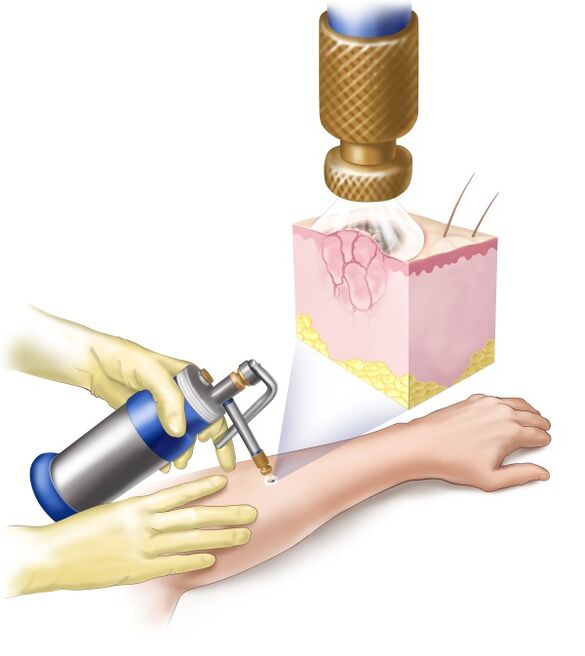
| Liquid nitrogen cryotherapy | Low temperatures are used to freeze papillomas.Liquid nitrogen is applied with a special applicator, the wart turns white and falls off.The treatment area becomes slightly inflamed and red.After a while, a crust forms, under which the process of epithelium formation begins.The risk of scar formation is minimal. |
| Electrocoagulation | Electric current is used to remove warts.During electrocoagulation, papilloma is cut off and blood vessels are fused, which reduces the likelihood of bleeding. |
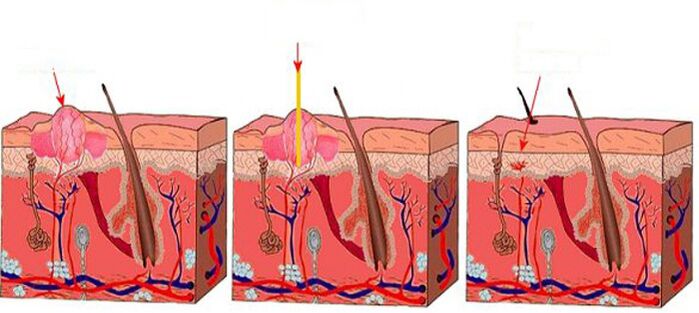
Minimally invasive treatment of any type of papillomas is recommended to be carried out comprehensively, using antiviral and immunostimulating drugs.The risk of relapse remains even after successful removal of tumors.
Folk recipes
Recipes from witch doctors and healers can be used in the fight against papillomas, but you should choose a remedy with your doctor.Many components used can cause allergies or individual reactions.
The following methods will help you remove warts at home:
| Name | Cooking recipe | Application |
| Celandine | A green and young plant must be cut, chopped and squeezed out the juice. | Celandine juice is applied to the wart, rubbed well and sealed with a band-aid, which must also be lubricated beforehand.It is recommended to repeat the procedure every other day. |
| Garlic | Peel and chop 2-3 heads of garlic.Add 2 tsp to it.any cream.Mix all ingredients well. | The resulting pulp must be placed on the papilloma, covered with a bandage and covered with a bandage.After 2-3 hours, remove the compress and rinse the treated area with warm, clean water.It is recommended to carry out the procedures every day for 10 days. |
| Melissa | Pour boiling water over the leaves of the plant, leave for 30-40 minutes and strain. | The resulting decoction should be drunk in 3-5 doses throughout the day. |

Folk remedies dry out warts, burn them out and cut off their nutrition through the circulatory system.Medicines taken orally further strengthen the immune system.
What are the dangers of self-medication?
Self-therapy at home can cause more than just side effects.There is a high probability of disease progression and degeneration of the affected tissues.Therefore, it is important to draw up a treatment regimen with your dermatologist.
Vaccination
The papilloma virus can also be suppressed through vaccination.Gardasil is most often used for this.In most cases, vaccination is carried out between the ages of 9 and 17 years to prevent infection of the body during the onset of sexual activity.
The vaccination is done 3 times throughout the year.The vaccine is very effective, since in 96% of cases it forms lasting immunity in the human body to the virus.
Treatment of papillomas will not help to completely get rid of the virus, but it is possible to prevent repeated recurrences of warts.The treatment method depends on the type of tumor, which is important to select with your dermatologist.
A photo with a description will allow you to preliminarily establish a diagnosis and undergo diagnostic methods that will confirm or refute the specialist’s assumptions.It is not recommended to engage in therapy on your own, as it can cause serious complications.